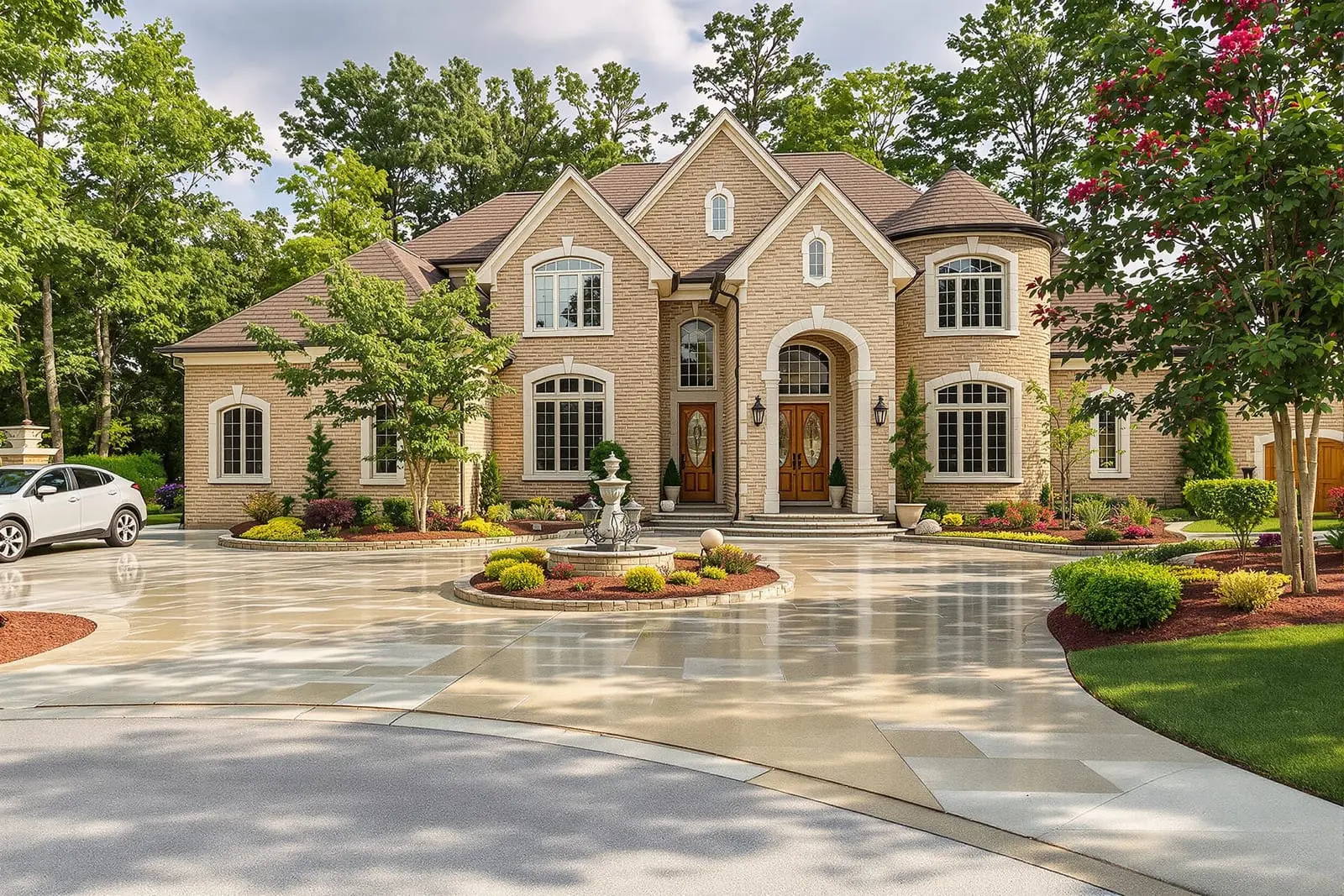
Our concrete and block masonry services in Jacksonville, FL provide strong structural walls for homes and additions. We build CMU foundations, load bearing walls, and partition walls with correct reinforcement and grouting. Slabs, steps, and pads are poured to spec. Rely on our experienced block masons for solid, straight, and long lasting concrete work.
Vanguard Masonry Jacksonville provides professional concrete block masonry throughout Jacksonville, FL and the surrounding area. Our licensed, insured crew delivers safe, clean, on-time work with a free estimate before anything begins. Call (904) 490-8981 or request your free quote.
Concrete and block masonry for real Jacksonville conditions
Concrete block masonry is popular in Jacksonville for one simple reason: it holds up to heat, storms, and humidity when it is done correctly. At Vanguard Masonry Jacksonville, we focus on structural strength first, then appearance, so you are not just getting a pretty wall that cracks in two summers.
Most of our concrete block projects start with a site visit. We check the soil conditions, drainage, existing cracks on nearby structures, and how water moves across your yard during heavy rain. Jacksonville’s sandy soils and sudden downpours can shift poorly supported block work, so footing depth and width matter. For standard block walls and structural partitions we typically pour reinforced concrete footings below the local frost line (which is shallow here) but deep enough to reach stable soil and away from tree roots.
From there, we plan whether you need standard 8x8x16 concrete masonry units (CMUs), heavier load bearing units, or specialty blocks like lintel and bond beam units to carry spans over doors, windows, or openings. For backyard walls and enclosures, we pay close attention to wind loads that come with coastal storms and thunderstorms. That is where vertical and horizontal reinforcing steel and proper grout cells matter, so the wall acts as a single system instead of a stack of blocks.
How we build with concrete block step by step
Once the layout is marked, we excavate for footings and install formwork as needed. We then place rebar in the footing according to the load requirement and local building codes, tying vertical bars that will extend up into the block courses. We pour a concrete mix suited to the local conditions, usually a 3,000 to 4,000 PSI mix, which cures reliably in Jacksonville’s heat and humidity.
After the footing has set, we start laying block on a full mortar bed. We use string lines, levels, and story poles to keep courses straight and level. In Jacksonville’s climate, mortar selection matters. We typically use Type S mortar for exterior and structural walls because it balances strength with some flexibility, which helps the wall handle slight soil movement without cracking everywhere. Joints are tooled to shed water instead of catching it, which helps against wind driven rain.
Every few courses, we tie the block work back to vertical rebar with wire or rebar chairs, then grout solid the specified cells. On tall or long walls, we integrate bond beams, control joints, and sometimes pilasters to control where any movement will occur. Openings for windows, doors, or gates get reinforced lintel blocks and additional steel. Before we finish, we check plumb, alignment, and joint quality across the whole run. For visible areas, we can strike different joint styles or prepare the surface for stucco or paint, depending on your preference.
Concrete flatwork, foundations, and tie-ins to block
Concrete flatwork and slabs often go hand in hand with block work, especially for garages, additions, patios, and outdoor kitchens. Vanguard Masonry Jacksonville treats the connection between flatwork and block as critical. If you are building a block wall on top of a slab, we verify that the slab is thick enough and has the right reinforcing to support it, or we cut and pour a separate footing strip where needed.
Preparation for flatwork starts with grading and compacting the subgrade. In many Jacksonville neighborhoods, we deal with loose sand that needs mechanical compaction so the slab does not settle and pull away from connected block walls. We typically use a compacted base layer of crushed concrete or limestone where access allows. Expansion joints and control joints are laid out to reduce random cracking, especially where concrete meets block columns or corners.
When pouring, we monitor the weather. High heat and wind can cause the surface to dry too fast, which leads to surface checking and weak spots. Light rain showers are common in the afternoons, so we plan pours in the morning when possible and use curing methods that protect the finish. For structural slabs that anchor block walls or columns, we tie slab rebar into vertical steel in the walls, so the entire structure works together against movement and storm winds.
What affects cost and how to avoid surprises
Concrete block masonry pricing in Jacksonville is influenced by more than just square footage. The main cost drivers are footing size, reinforcing steel requirements, block type, access to the work area, and finish choices. A simple, short garden wall with basic finish and easy truck access costs less per foot than a tall structural wall that needs engineered rebar spacing and full cell grouting.
Soil conditions can add or reduce cost. If your yard grades well and the soil compacts tightly, excavation and footings are straightforward. If we find soft or saturated areas, we may need wider footings, deeper excavation, or drainage solutions, which we discuss before work starts. Trees close to the planned wall, underground utilities, and tight backyards that require more hand work instead of equipment also affect labor.
Finishes are another factor. Leaving block exposed is the most economical, but many Jacksonville homeowners prefer stucco, paint, or decorative block faces to match the house or neighborhood guidelines. We explain the prep needed for each finish. For example, stucco requires clean, sound block joints, control joints, and usually a base coat. Paint must be breathable and suitable for masonry in a humid coastal climate so moisture does not get trapped and peel the surface. We provide written estimates that break out these elements so you can compare options clearly.
Problems we prevent in Jacksonville masonry and how we address them
Local customers often call us to fix issues caused by rushed or underbuilt concrete block work. Common problems include stair step cracks in mortar joints, leaning or bulging sections, water intrusion through block cores, and rust stains from improperly placed or unprotected steel. Vanguard Masonry Jacksonville focuses heavily on preventing these problems at the build stage.
To reduce cracking, we install control joints at proper intervals and at changes in wall height or thickness, instead of hoping the wall will not move. For areas exposed to sprinkler overspray or persistent standing water, we promote drainage solutions and sometimes a masonry sealer suited to Florida conditions, rather than relying on paint alone. We also avoid burying untreated block walls directly in soil without waterproofing and proper footing depth, which is a common reason for moisture wicking and spalling.
In repair situations, we start with a cause analysis. If a wall is cracking because of a broken downspout or poor grading, simply patching the crack will not hold. We look at runoff patterns, roof lines, and nearby structures to see what is loading that section of masonry. Structural repairs can involve selective demolition, new reinforced sections, stitching cracks with epoxy or helical ties, and adding new footings or pilasters. The goal is not just to hide damage, but to give you a wall that holds up through Florida’s storms, heat, and daily use.
“
Professional concrete and block masonry, done right the first time, quality materials, honest pricing, and results that last.
Vanguard Masonry Jacksonville
Concrete and Block Masonry Across Our Service Area